The word that connects us
On 31 October, Slovenia marks Reformation Day, remembering the period that brought the Slovene language into books, schools and public life.
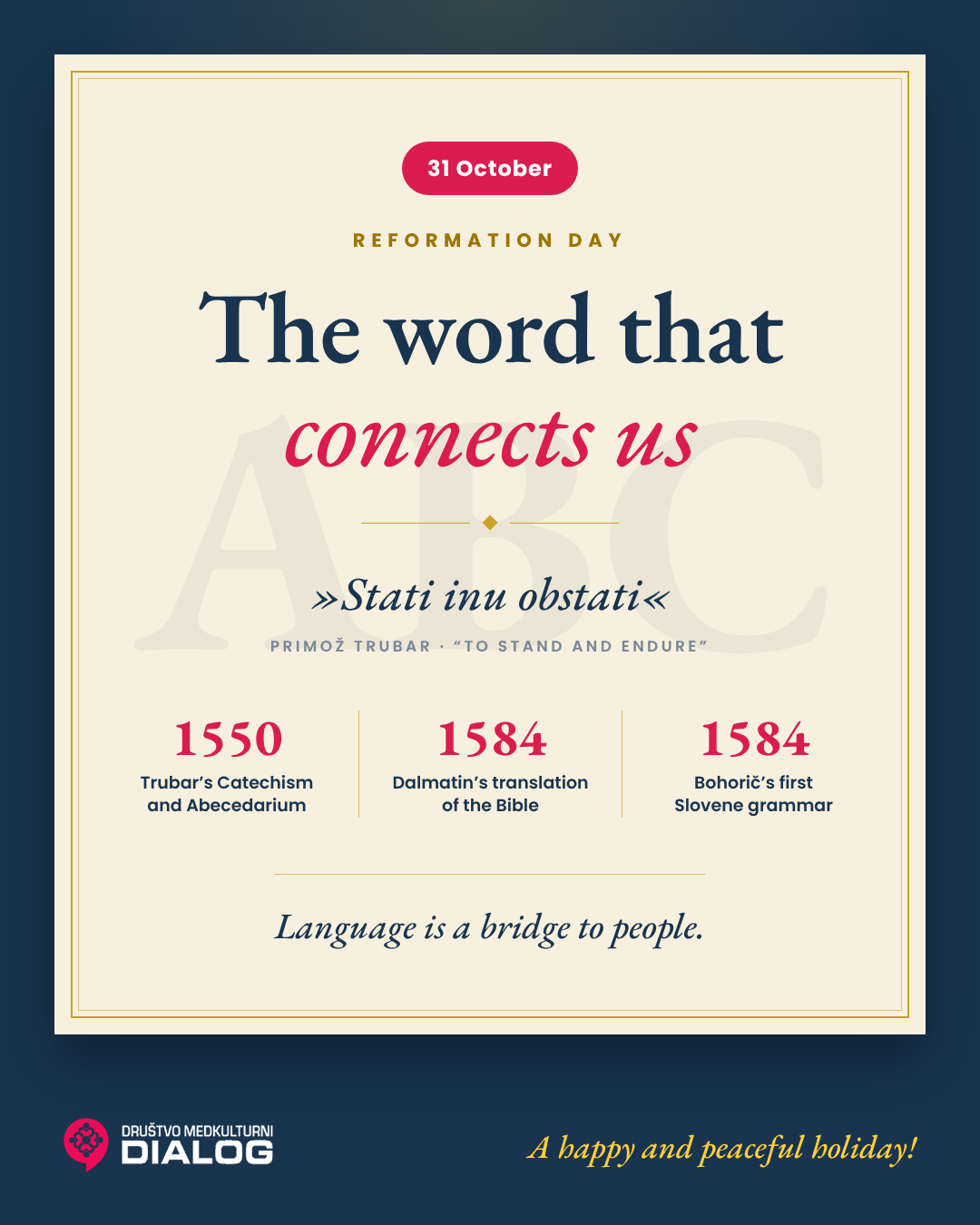
In 1550, Primož Trubar published the first two books in Slovene, the Catechism and the Abecedarium. The very first printed Slovene sentence opens with the words “To all Slovenes”. Jurij Dalmatin followed in 1584 with a translation of the whole Bible, and in the same year Adam Bohorič published the first grammar of the Slovene language. Slovene had become a language of books and learning.
How Slovene became a language of books
- 1550
The first Slovene books
Primož Trubar publishes the Catechism and the Abecedarium, the first two books printed in Slovene.
- 1584
The Bible in Slovene
Jurij Dalmatin publishes his translation of the whole Bible.
- 1584
The first grammar
Adam Bohorič publishes the first grammar of the Slovene language.
Language is a bridge to people and a first step towards feeling at home.
At Društvo Medkulturni Dialog, we see every week what this language means to people who have come to Slovenia from elsewhere. In our conversation circle, around a shared table and in conversations with neighbours, Slovene grows more familiar day by day. When someone speaks Slovene with confidence for the first time, it is more than a new skill: it is a bridge to people and a first step towards feeling at home.
Trubar’s conviction that the word should be open to everyone, in a language they understand, is as valuable today as it was almost five centuries ago.
Conversation circle in Slovene
Our weekly conversation circle is a relaxed place for foreign speakers to practise Slovene. This semester there are still 2–3 places in the beginner A2 group on Wednesdays.
We wish everyone a happy and peaceful
Reformation Day!
»Stati inu obstati« · Primož Trubar