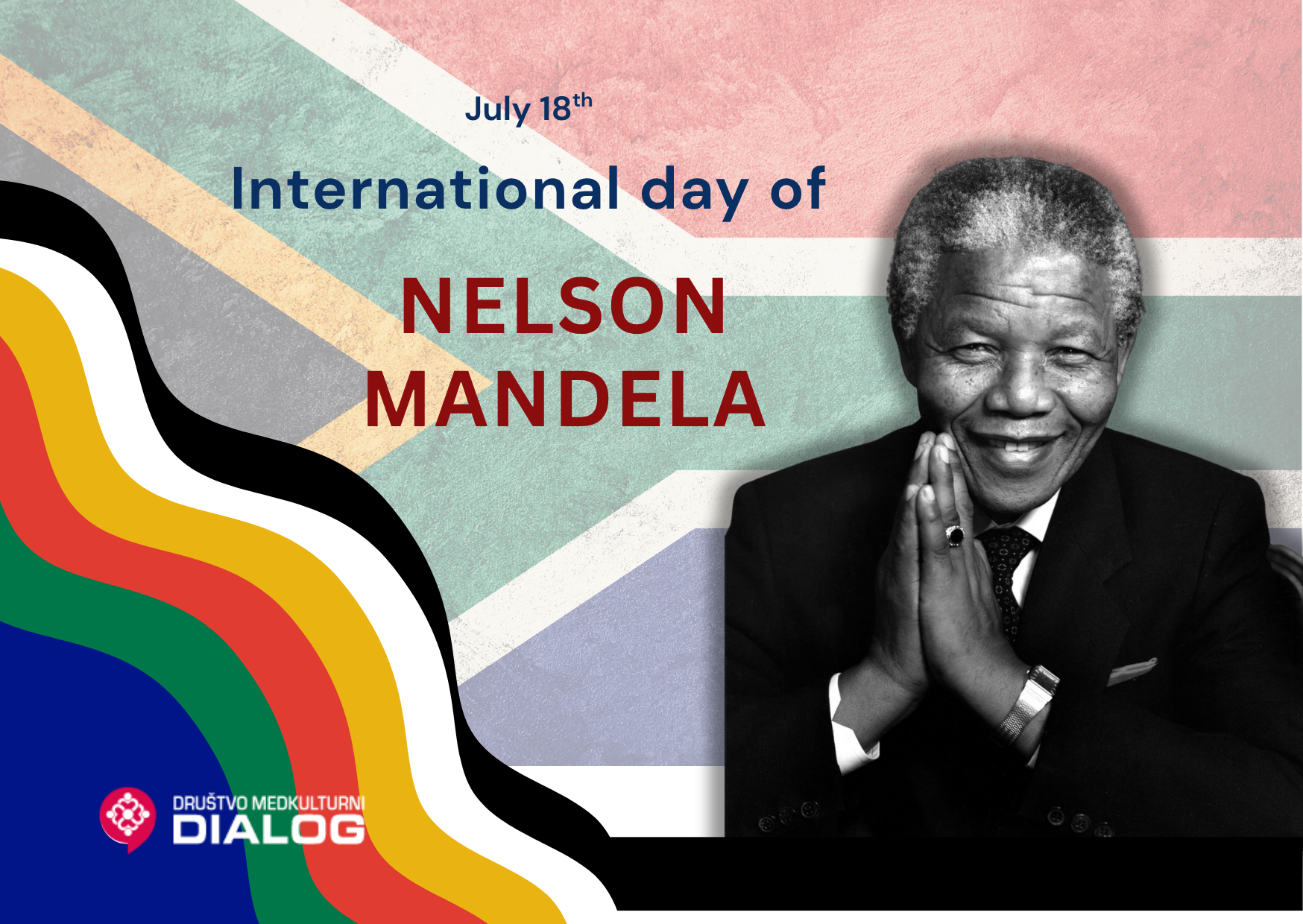
International day of Nelson Mandela
The heroes are those who make peace and build.”
— Nelson Mandela
Throughout history, lots of people around the world have faced discrimination — because of their race, skin colour, gender, age, or other differences. Sadly, injustice and inequality still exist today. But courageous individuals have worked hard to make the world a fairer place. One such person is Nelson Mandela.
Every year on 18 July, the world comes together to celebrate Nelson Mandela International Day. More than honoring his birthday, this day calls to action — to honour Mandela’s legacy by serving others and promoting justice, dignity, and peace. His life reminds us that meaningful change begins with individual acts of courage and compassion.
Nelson Mandela became a symbol of resistance against apartheid — a system of racial segregation that divided South African society and denied basic rights to the majority Black population. While white South Africans held most of the power and wealth, Black communities lived under strict laws that limited their freedoms and opportunities.
Mandela joined the anti-apartheid movement in the 1940s. At first, he fought peacefully — through protests, strikes, and civil disobedience. But after witnessing brutal government crackdowns, he co-founded Umkhonto weSizwe (“Spear of the Nation”), an armed resistance group. In 1962, Mandela was arrested. A year later, he was sentenced to life in prison.
Mandela spent 27 years behind bars, most of them on Robben Island. Despite the harsh conditions, he remained committed to reconciliation, not revenge. When he was released in 1990, Mandela became a global symbol of peace and forgiveness.
In 1994, South Africa held its first democratic elections. Mandela became the country’s first Black president, serving until 1999. During his time in office, he helped launch the Truth and Reconciliation Commission, an effort to confront past human rights abuses and promote healing through restorative justice — focusing on repair instead of punishment.
While some critics argue that Mandela’s presidency had limitations — especially regarding economic reforms and rising violence — his leadership helped South Africa transition away from centuries of oppression toward democracy and hope.
After stepping down from office, Mandela dedicated his later years to fighting poverty and raising awareness about HIV/AIDS. He passed away in 2013 at the age of 95. But his legacy continues to inspire millions across the world.
Every year on Mandela Day, people are encouraged to spend 67 minutes doing something positive for their communities — one minute for each year Mandela spent in public service. From helping a neighbour to volunteering for a cause, these small acts remind us that change starts with us.
As Mandela once wrote:
“To be free is not merely to cast off one’s chains, but to live in a way that respects and enhances the freedom of others.”
— Nelson Mandela, Long Walk to Freedom
At Medkulturni Dialog, we believe that the values Nelson Mandela stood for — dignity, equality, empathy, and community — are just as vital today as ever. Whether you’re a student, a volunteer, or a newcomer to a new land, your voice matters. This Mandela Day, let us reflect on his words and commit ourselves to building bridges, not walls.
“What are you doing to make the world a better place?”
Source: United Nations – Mandela Day
Source: National Geographic