
The 2nd Intercultural Dialogue Discussion, Dialogue Talks, took place on 22 January in Budapest.
The second evening of the Dialogue Talks series took place at the John Wesley Theological College in Budapest and was dedicated to ethnically conditioned polarization. Experts from four countries discussed how social boundaries between communities are shaped through exclusion, stereotypes, and everyday subtle signals that determine who is “inside” and who remains “outside.”
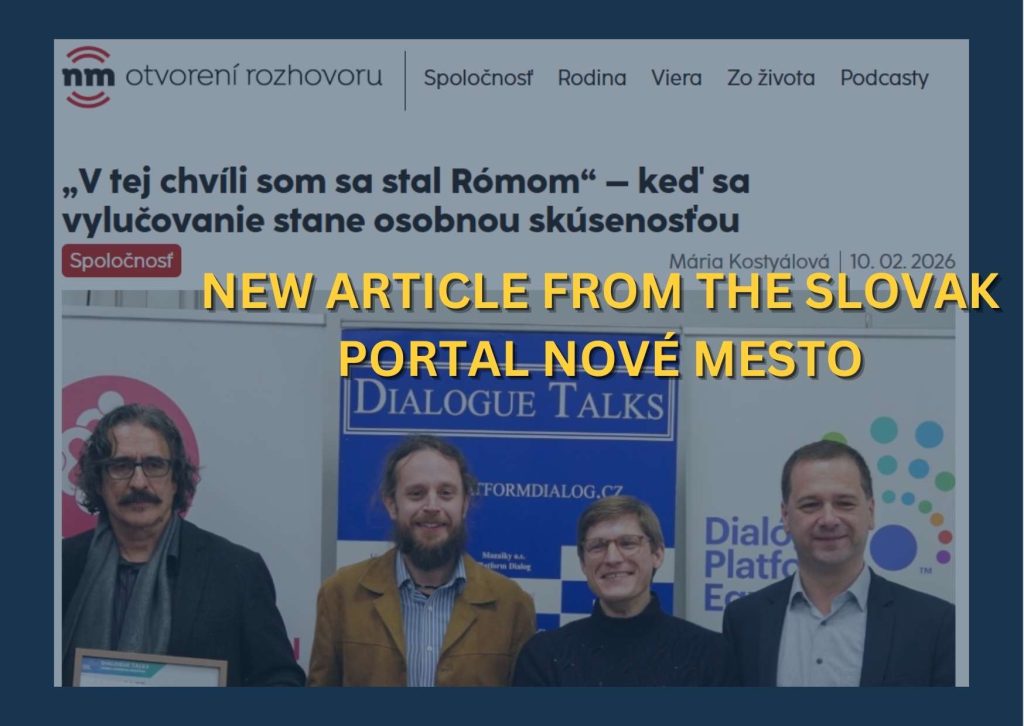
The author of the report, Mária Kostyálová, among other points, summarized that sociologist Miklós Szabó emphasized that polarization begins at the moment when a person becomes a category—when society uses identity as a label of otherness. Writer Carlos Pascual pointed out that identity often reflects changes in society rather than in the individual, and raised the question of whether a person can truly feel at home somewhere. Theologian Pavol Bargár explained that ethnic identity is deeply emotional and therefore vulnerable, and that religion can function both as a source of division and as a space for reconciliation. Jozef Žuffa highlighted that dialogue is прежде all an inner attitude—the willingness to see a person beyond stereotypes and to give them space to be heard.
We also reported on the event in Budapest on our website. You can read our summary HERE.


